Rare But Not Alone: Audrey’s Story
When Audrey was born, there were no signs of neurofibromatosis. She was healthy and adorable. It wasn’t until she was about two months old that Amanda noticed two small spots, one under her arm and one on her abdomen. These had not been there at birth. At Audrey’s four-month appointment, there were five spots. By six months, there were eight.
At first, doctors suggested they wait and watch. They were referred to Lurie Children’s Hospital, where they met with Dr. Listernick, a neurofibromatosis (NF) specialist. He confirmed the café-au-lait spots and asked them to come back in a year so they could see what else developed. That year felt longer than twelve months.
More spots appeared. Google searches filled quiet evenings. Questions multiplied faster than answers. By Audrey’s 18-month appointment, she had close to 50 spots. That was the moment Dr. Listernick told Amanda to stop counting.
“We know she has NF, and she will get more spots,” Amanda recalls. “What do counting spots do for us aside from making us worry? We needed to focus on making sure she has the support she needs.”
Genetic testing followed. In August 2022, they received the call confirming Audrey had NF1. Amanda and her husband, Matt, remember sitting together after that call, trying to absorb what it meant. They did not have a roadmap, but they did have each other. In those early days, many of their conversations ended the same way: “We’ll figure this out.”
For Amanda, who describes herself as a planner, the hardest part was learning that NF looks different for every child. There was no clear timeline, no predictable path, and no way to map out what the future would hold. That uncertainty felt suffocating. She took a leave of absence from work because the emotional weight was simply too much to carry while trying to function normally.
In those early months, they were told to focus on trusted sources for information, including NF Midwest. When Amanda finally visited the website, it brought something she desperately needed, education and clarity.
“It helped us understand the facts about NF,” she says. “It provided clarity on the questions racing through our heads.”
Clarity does not remove fear, but it steadies it.
Then came September 2022. The family was on vacation in Cleveland, enjoying a baseball game with friends, when Audrey stopped mid-bite of a chip and stared into the distance. It lasted about a minute. Then she went back to eating as if nothing had happened. They had seen something similar before. This time, they called Dr. Listernick.
Neurology appointments followed. EEG tests confirmed epilepsy. Medication dosing brought its own challenges. In December 2022, an MRI revealed an optic pathway glioma on her left optic nerve and a neurofibroma along her spine. Suddenly, the word tumor entered their everyday vocabulary.
“The word tumor is scary,” Amanda says.
From that point forward, their lives began moving in three- and six-month cycles. Each MRI shaped their calendar. Each scan brought a wave of anxiety that built quietly as the appointment approached.
“It changes how we plan everything,” Amanda explains. “If we know we have appointments coming up, we schedule easier weekends. Dinners become fast food. We stay close to home. It’s an emotional rollercoaster leading up to it, wondering, ‘Is this it? Is this when it all changes?’”
Many parents in the rare disease community understand that question. You keep living your life, but part of you is braced for impact.
As scans continued, Audrey’s tumor grew. And grew again. Neuro-oncology became part of the team. Ophthalmology tracked her vision closely. Endocrinology was added as Audrey grew rapidly. Coordinating care meant driving into Chicago regularly, arranging childcare for Sterling, Audrey’s big brother, and leaning on supportive neighbors.
But emotionally, Amanda was unraveling.
In August 2024, after months of carrying fear alone, she told her husband Matt that she was not okay. She felt overwhelmed by guilt, grief, and shame. She felt like she was failing her daughter because she could not control what was happening.
She entered an eight-week treatment program focused on trauma and coping skills. There, she learned how much catastrophic thinking had taken over. Every scan felt like it would bring the worst possible news. Every symptom sent her spiraling.
She also learned something that changed everything: she did not cause this, and Audrey needs two healthy parents.
The very next MRI brought devastating news. The tumor had doubled in size, and a panic attack followed. But this time, Amanda had tools. She had language for what she was feeling, and she had support.
And then, months later, something unexpected happened.
After a season of steady growth, the tumor shrank.
“It felt like we could breathe,” Amanda says. “It almost didn’t feel real. We had a literal weight removed from our shoulders. We could feel normal for the first time in years.”
They joke that Audrey’s frozen broccoli phase may have had something to do with it. Humor has become part of their survival. But underneath the joke is something more powerful: hope returned.
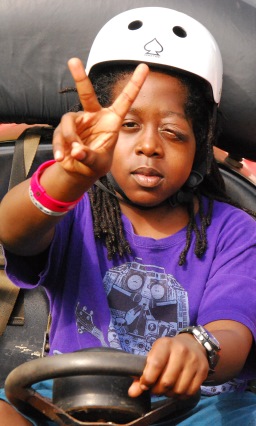
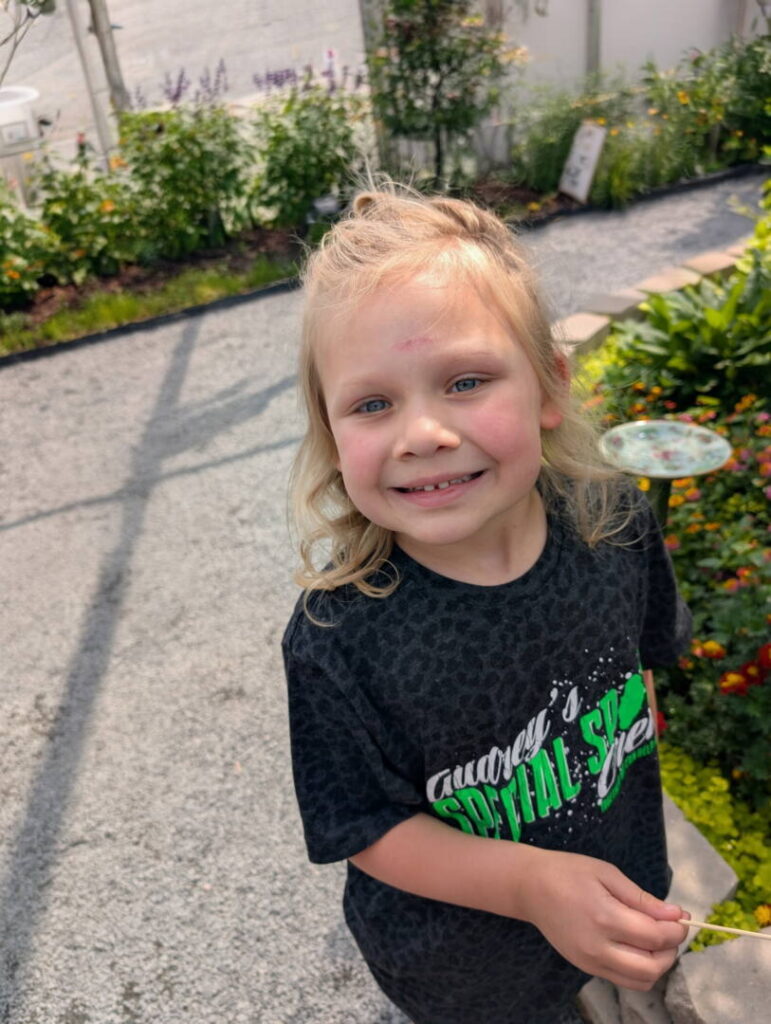
Through it all, Audrey who is 5, remains unmistakably herself. She loves music and proudly sings lyrics from The Greatest Showman: “I’m not scared to be seen, I make no apologies, this is me.” It is hard not to see those words as prophetic.
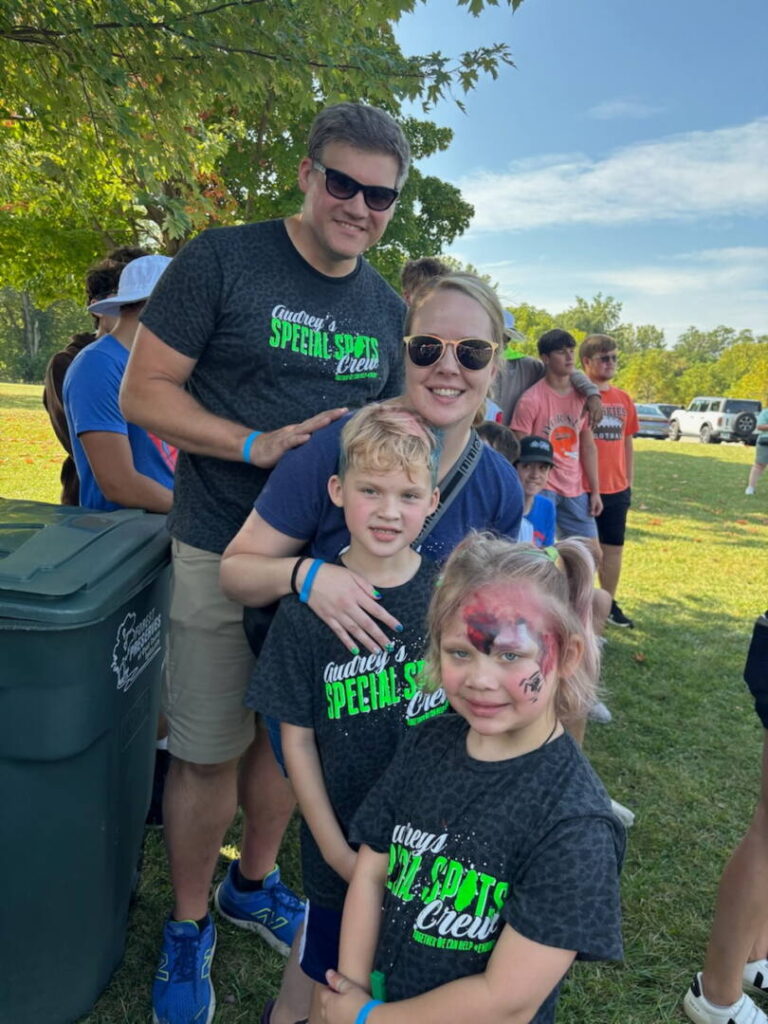
Sterling, who is 7, and is Audrey’s older brother, has stepped into this journey with quiet strength. He reminds her to take her medicine, asks about scan results, and shows empathy well beyond his years. Sometimes it is hard to share attention, but his compassion shines through.
Rare diseases are often invisible. Most people would never guess the layers this family carries. That is why Rare Disease Day matters so deeply to Amanda.
“We don’t know the battles anyone faces,” she says. “Rare disease is not a competition of who has it the worst. It’s a chance to bring awareness to everyone fighting battles.”
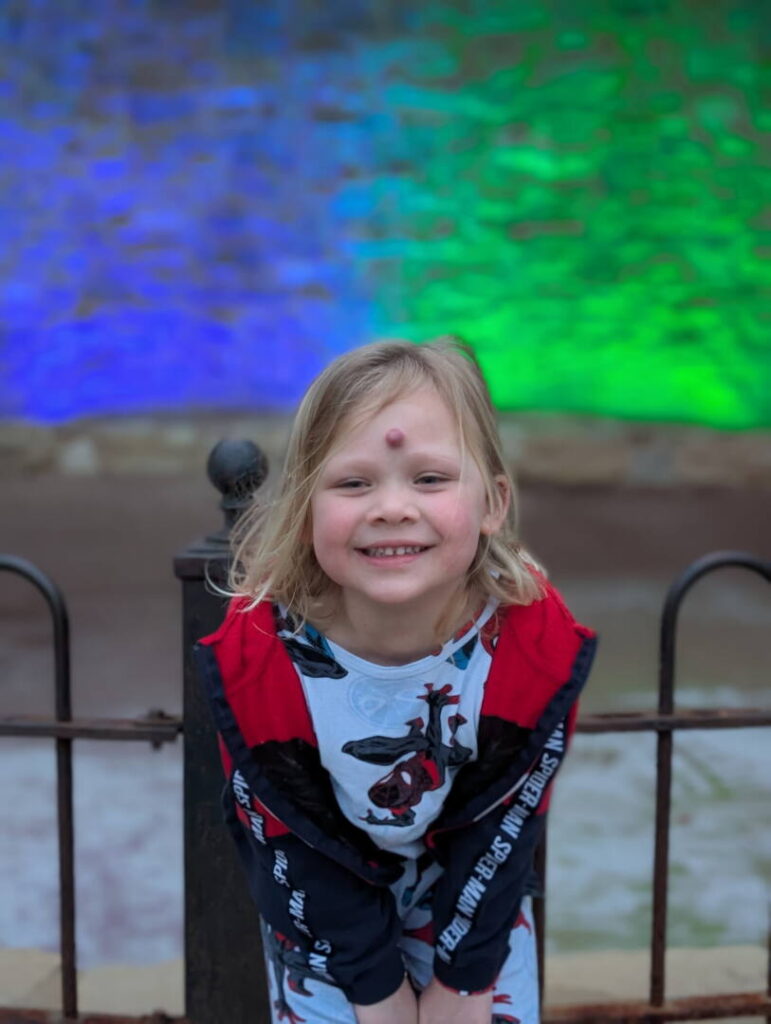
Advocacy became Amanda’s way forward. After being laid off from work in February of 2025, she realized she needed to channel her energy somewhere meaningful. Audrey is too young to speak for herself, so Amanda chose to speak for her. She organized events at Phillips Park, near their home in IL. She helped secure her local town and IL state proclamations. She worked to light landmarks blue and green. She shared Audrey’s story publicly and invited others to learn.
Advocacy did not erase fear, but it gave it direction.
Through NF Midwest, Amanda found facts instead of guesses. She found a community of other NF parents. She found reassurance that awareness and research efforts are moving forward. Most of all, she found connection.
On this Rare Disease Day, Audrey’s story is proof that living with NF is not only about medical appointments and scan results. It is about mental health, resilience, and singing the lyrics to The Greatest Showman out loud!
.png)